
The Selective Writing Test: One Task, Thirty Minutes
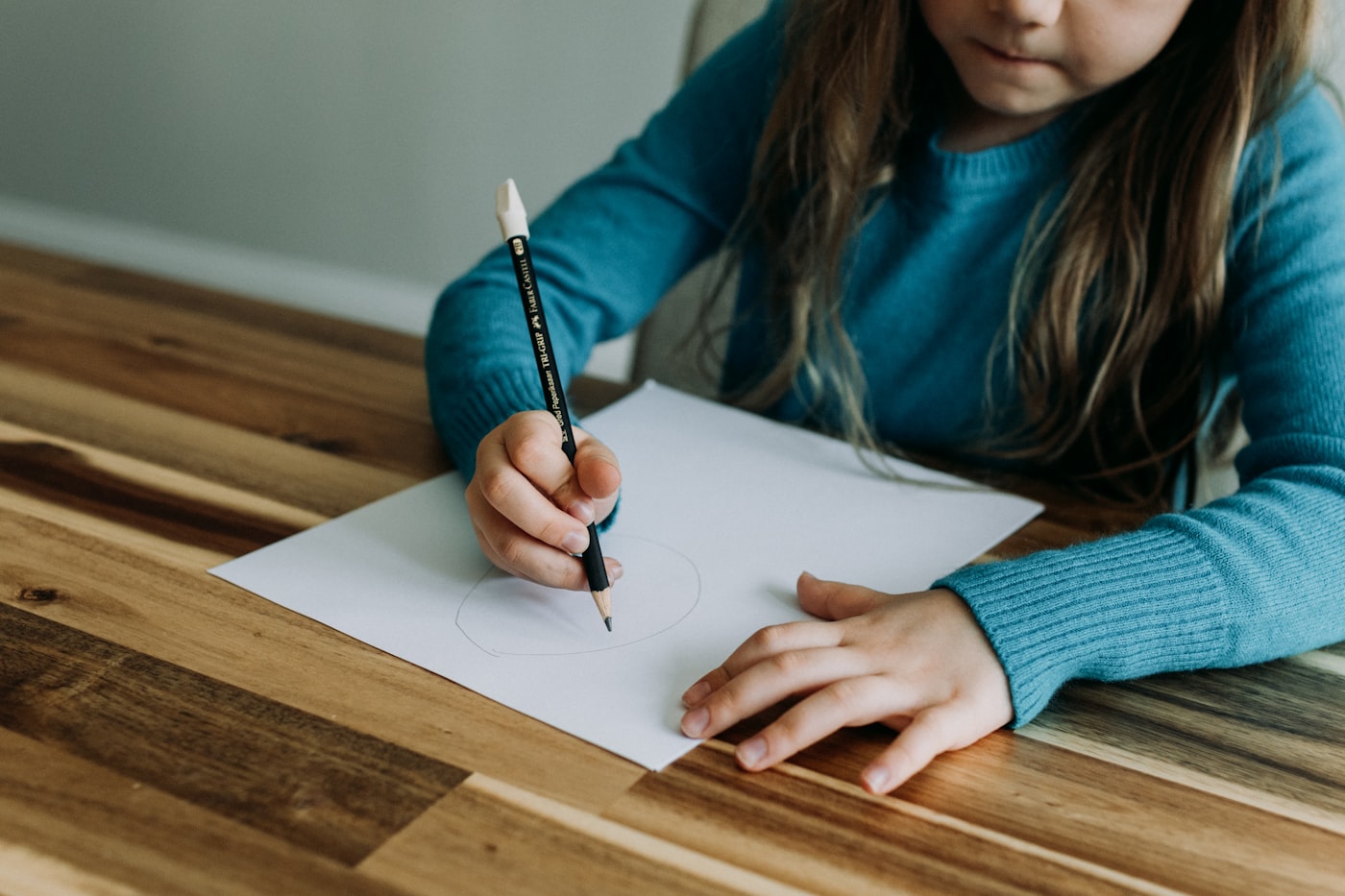
The Selective writing test is one task, 30 minutes, and an open response. It is the only component of the placement test that is not multiple choice, which means it is also the only one where a lucky guess is worth nothing and a blank page is exactly what it looks like. Your child is given a topic and has to write about it according to the instructions provided.
That is a short brief, and short briefs are deceptive. Here is what sits underneath it.
What the department says it is marking
The department's own description is worth reading slowly. The writing component assesses "the creativity of the student's ideas and their ability to write effectively for a purpose and audience".
There are two halves to that sentence and most preparation only serves one of them. The first half is about ideas: whether your child has something of their own to say rather than a memorised template with the nouns swapped out. The second half is about craft in service of a job: whether the writing does what this particular piece needs to do, for the person it is meant to reach.
Notice as well what is not in that sentence. There is nothing about length. Nothing about a quota of adjectives, a bank of impressive vocabulary, or a required number of paragraphs. Those are conventions that circulate between families and coaching colleges, not stated criteria.
The whole brief in one line
Ideas that are genuinely your child's, written so they land on a particular reader for a particular reason, inside half an hour.
Planning time is not wasted time
Thirty minutes feels desperately short, so the overwhelming instinct is to start typing on the first line at second zero. The result is predictable and very easy to spot: a piece that changes its mind in the middle, arrives somewhere the opening did not promise, and stops rather than ends because the clock ran out.
A few minutes spent deciding the shape before writing buys most of that back. Not a formal plan with roman numerals, just three decisions: what happens, who it is for, and how it finishes.
The last one carries more weight than parents expect. Deciding the ending first is the trick that most reliably improves a child's writing under time pressure, because everything before it then has somewhere to go. A piece that knows its destination reads as controlled even when it is brief. A longer piece that is still casting about at the halfway mark does not.
Writing for a purpose and an audience
This phrase does a lot of work in the department's description, and it is the part children are least often taught to think about explicitly.
Purpose is what the piece is trying to do: convince, unsettle, explain, amuse, make somebody see a place they have never been. Audience is who it is doing that to. The instructions on the day may name one or both, and when they do, they are not decoration. They are the task.
The most common failure is not bad sentences. It is a piece with no discernible reader, written into the air, technically competent and oddly inert. A child who has decided "I am writing this so that someone who has never worried about anything understands what the night before a test feels like" writes differently from a child who has decided "I am writing a story about a test". Same topic, entirely different piece.
So the habit worth building at home is a two-question ritual before a single sentence gets typed. Who is reading this, and what do I want them to think or feel by the last line.
Handwriting-era advice does not all transfer
The test is typed on a department-supplied computer, and a good deal of traditional writing-test advice quietly assumed a pen.
Some of it can simply be dropped. Neat handwriting no longer earns anything. Nor does fitting the lines, ruling a margin, or crossing out tidily. If your child has been told their writing is untidy and has taken that to mean they are a poor writer, this component is a chance to separate the two, and that is worth saying to them out loud.
What replaces it is less obvious. Typing comfortably matters, because a child who hunts for keys writes a shorter and simpler piece than the one they are capable of thinking. Editing on screen matters more than it did on paper, because moving a sentence is now something you can actually do, and a child who does not know how will retype whole paragraphs and lose minutes doing it. And knowing what the on-screen editor offers before test day is worth an afternoon. Do not assume it behaves like the word processor at home. The department's own published materials and practice test are the place to check what is available, rather than a forum post.
The other quiet change is drafting. On paper, many children plan in the margin. On a screen there is no margin, so the plan has to live somewhere your child has decided on in advance and practised using.
Why parents underestimate this component
Three reasons, and all three are understandable.
The first is that writing looks familiar. Your child has written stories since infants school, so it does not present as a thing to prepare for in the way an unfamiliar reasoning paper does. The second is that it is one task, so it feels small next to a paper with forty questions on it. The third, and the strongest, is that progress in writing is hard to see. Multiple-choice practice produces a number that moved. A piece of writing produces a piece of writing, and most parents do not feel qualified to judge whether this month's is better than last month's.
The consequence is that families often give the least time to the component with the most room to move. Every component is reported in its own band on the performance report, and writing is one of the four that appear there. Reading those bands is worth understanding before August.
A half-hour, once a fortnight
One real topic, a clock set for 30 minutes, typed on a screen. Then read the piece aloud together and ask one question: who was this written for?
That is the entire programme. A child who has done a dozen of these walks in already knowing what 30 minutes feels like from the inside, which of their instincts to trust, and how it feels to finish rather than to stop. Almost nobody arrives with that, and it is available to anyone willing to spend half an hour a fortnight on it. What to actually say about the piece afterwards, if you do not feel qualified to judge writing, is the subject of helping with writing at home.
Selective Edge is not affiliated with the NSW Department of Education or the Selective High Schools Test administrators. This guide is general information for parents, drawn from publicly available test materials.